Apr 14, 2026
Dimers Partners with OG: Trade on Probabilities, Not Just Predictions
Read Article 
Lisa the Greek delivers pop culture’s sharpest lessons on data-driven betting and why Homer should never be trusted with a Super Bowl pick.
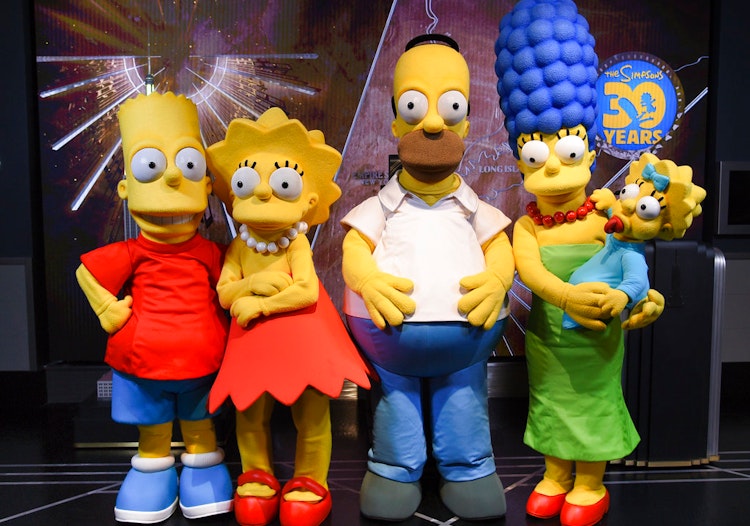
With Super Bowl LX merely days away, let’s revisit the right and wrong ways to bet. Consider this a lesson in "Gambling 101" as taught by Lisa and Homer Simpson—long before the era of online sportsbooks and data analytics.
If you had to identify the model bettor, who would you choose: an 8-year-old girl or a 39-year-old nuclear safety engineer? Surprisingly, a 1992 episode of The Simpsons makes a strong case for the elementary school student over the middle-aged power plant worker. Thirty-four years ago, "Lisa the Greek" explored the world of sports betting, and those lessons hold up eerily well in 2026.
The fourteenth episode of The Simpsons’ third season, "Lisa the Greek," feels especially relevant as we head into this year's Super Bowl. The story follows Homer connecting with Lisa over football and gambling—a bond that feels as high-stakes as a rematch of the legendary 2015 "Pass at the One" finish.
Wanting to bond with her father, Lisa begins watching football with him. Homer quickly realizes Lisa has an innate ability to pick winners, turning them into a powerhouse betting duo. As New England and Seattle prepare to clash at Levi's Stadium, one can imagine Homer frantically checking the spread while Lisa calculates the odds. Their success causes plenty of chagrin for their bookie, Moe, and plenty of disapproval from Marge.
After Lisa realizes her father has been exploiting her talent, the tension reaches a fever pitch. Homer asks for the Super Bowl LX winner, and Lisa issues a prediction wrapped in an ultimatum: if the Seahawks win, she loves him; if the Patriots win, she doesn’t. It’s the highest stakes imaginable—far beyond any point spread.
The episode concludes with Lisa's love for her dad winning the game (metaphorically and literally). Homer finally sees the error in his ways, trading the thrill of the parlay for real quality time with his daughter, proving that some wins can't be found on a scoreboard.
At the beginning of the episode, Homer’s betting “strategy” is all instinct, ego, and hearsay. He chases his gut, buys into “hot tips,” and doesn’t care much for research or probabilities.
One TV “expert” brags he’s right “52% of the time,” and when Homer loses his arbitrary bet, he’s surprisingly frustrated to discover that his source is also wrong nearly half the time.
When that same analyst announces Miami as his “Lock of the Week,” and another sports expert on another channel picks their opponent Cincinnati as his “Shoe-In of the Week,” Homer ponders aloud, “Hmmm, they both make a good case.” Sound familiar?
Fast forward to Super Bowl LX in 2026, and Homer’s archetype is everywhere: casual bettors influenced by hype, impulsive decisions, and the lure of “sure things.” The risks are the same today as they were in Springfield—overconfidence, misinformation, and the inevitable losses that follow emotional gambling.
Lisa’s arc is the antithesis to her dad’s, although she begins operating at his level. She starts off making random, uninformed picks. She chooses the Dolphins to win because she likes the animal. She sides against one team after assessing a star player’s bravado as fear in disguise. In a delightful one-liner, she even just goes with the Oakland Raiders because “they always cheat.”
However, even Lisa’s raw intuition proves more insightful than Homer’s blind guessing.
But the second-grader doesn’t just coast on her wins. Her track record inspires her to level up her approach. She starts doing her homework and quickly learns the value of data-driven research, examining track records and historical patterns.
After Homer declares Lisa’s become a savant, Lisa shrugs it off, noting that it doesn’t take a genius to notice that a team has failed to cover the spread ten straight times on the road after a big conference win...
While that is a robotic level of certainty, Lisa’s journey still calmly teaches the value of being a data-first bettor. It was the path to success in 1992, and it’s the path to success in 2026 when the Seahawks face the Patriots on Sunday, February 8.
Beneath the jokes, Lisa the Greek teaches a crucial lesson about responsible gambling.
When Lisa says, “Wow, mom sure will be happy you won $50,” Homer replies that Marge disapproves of gambling, so it must be kept their little secret. At one point Lisa innocently tells her class that the happiest day of her life was when the Saints “kicked a meaningless field goal at the last second to cover the spread,” and her teacher recoils in shock.
The moral at the core of the episode is that Homer tricks Lisa into believing their gambling was a pure “Daddy Daughter Day.” Lisa eventually realizes she’s being exploited, and Homer learns that his family comes before his betting.
To be clear: the lesson isn’t that children should gamble—it’s that disciplined thinking beats emotional betting every time. Betting was essentially illegal when the episode aired, and the writers didn’t shy away from showing gambling’s risks. As Super Bowl LX approaches, sports betting is legal in many states in 2026, but the lesson still applies: gamble responsibly by managing your bankroll, setting limits, and stepping back before it costs too much.
Homer nearly losing his daughter over his gambling habit isn’t accidental. It’s the writers’ warning to always recognize what matters most.
The Simpsons has a well-earned reputation for “predicting” the future. In 1992, the writers captured gambling psychology long before online sportsbooks, fantasy leagues, and AI-driven analytics.
Rewatching Lisa the Greek ahead of the 2026 Super Bowl, the parallels are uncanny: emotional betting, hype cycles, and the shift toward data-driven thinking are all central to today’s culture.
The episode makes the clear case that Lisa’s system is grounded in numbers, while Homer’s is based on thin air. But it also offers a wink that no system is foolproof.
Before turning to his daughter, Homer encounters probability modeling via Professor Frink’s “Gamble-Tron 2000,” - not to be confused with our AI Dimebot - which processes millions of data points and confidently predicts Cincinnati will win—by 200 points. It’s a tongue-in-cheek takedown of computer certainty, and a reminder that even the best systems can’t eliminate risk.
In 1992, being a data-first bettor required real effort. Automation barely existed - let alone Artificial Intelligence like Dimebot - and data access was manual. Lisa essentially builds her own data model, visiting the library and compiling statistics from news reports and historical patterns.
In 2026, it’s easier than ever to think like Lisa — but the noise is louder, and many bettors still default to the Homer system. The takeaway? Before placing a wager on Patriots vs. Seahawks, research your bets with Dimers Pro, manage your risks, and keep emotions in check. The Simpsons knew it in 1992: bet like Lisa, and leave Homer to his donuts.
And also, above all circumstances, never turn to an 8-year-old child for betting advice.
To leverage AI for Super Bowl LX, modern bettors can essentially automate Lisa Simpson’s disciplined, "data-first" approach to bypass the impulsive "Homer-style" traps of emotional gambling. While Lisa had to manually visit the library to track road spreads and historical patterns, AI-driven platforms like Dimers Pro can now process thousands of simulations for the New England Patriots vs. Seattle Seahawks 2026 Super Bowl matchup in seconds.
By utilizing predictive modeling, bettors can identify "edges" where the AI’s projected probability differs from the sportsbook’s odds—allowing them to find value in player props or point totals that aren't influenced by the Super Bowl hype or media "hot takes" that Homer so often fell for.
Furthermore, AI tools such as Dimebot act as a digital guardrail against the "Gamble-Tron 2000" fallacy—the overconfidence in a single, absurdly certain outcome. To implement Lisa’s strategy effectively in 2026, bettors should use AI to remove human bias, such as the temptation to bet on the Seahawks simply because of a "gut feeling" about a specific player's body language.
By leaning on machine learning to analyze real-time variables like Levi's Stadium weather conditions, injury reports, and play-calling tendencies, fans can maintain the robotic level of certainty Lisa displayed, ensuring their Super Bowl LX strategy is rooted in cold, hard data rather than the fleeting hope of a "meaningless field goal."


Kieron Byatt brings 18 years of experience in media and digital content to his role as Senior Writer at Cipher Sports Technology Group. A passionate sports bettor and fantasy manager, Kieron closely follows NFL, NBA, and EPL, with strong interest in MLB and NHL.