Jun 16, 2026
Austria vs. Jordan prediction, odds, props, World Cup 2026 picks [Group Stage]
Read Article 
Why are hydration breaks at the 2026 World Cup controversial, and what do they mean for betting?
World Cup hydration breaks have become one of the biggest talking points of the 2026 FIFA World Cup. The 2026 tournament introduced mandatory hydration breaks in every match, a major change from previous World Cups where cooling breaks were only used in extreme heat.
Many critics and commentators argue that hydration breaks can influence momentum and tactical decisions during matches.
Hydration breaks are designed to protect player welfare, though many fans and analysts compare them to a forced timeout because they create a scheduled mid-half stoppage for coaching adjustments.
From a betting perspective, hydration breaks present a potential variable that can impact key markets and live odds. While mandatory hydration breaks in every match are new to the 2026 World Cup, the sample size is still too small to draw firm conclusions about their betting impact.
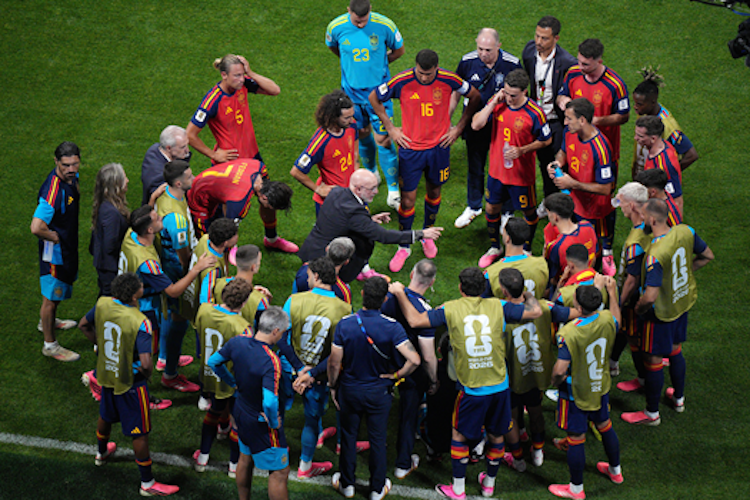
A hydration break is a short, temporary stoppage in play that allows players to drink fluids and cool down. Many coaches also use it as an opportunity to address the whole team and make tactical adjustments.
Unlike halftime, hydration breaks are a short, 3-minute pause that occurs during a half rather than between halves. For fans familiar with NBA or NFL broadcasts, they may feel similar to quarter-time breaks or timeouts because they interrupt play and allow coaching discussions. Players typically gather near their benches while coaching staff quickly relay tactical messages.
For players, the breaks provide a chance to recover physically. For coaches, they create a rare opportunity to address the team without waiting until halftime.
FIFA first announced the new hydration break rules in December 2025, stating that they were primarily about player welfare, with matches being played across the United States, Canada, and Mexico during the summer months.
Hydration breaks have appeared at previous World Cups and international tournaments, traditionally reserved for extreme weather conditions at the referee's discretion. FIFA first introduced official cooling breaks at the 2014 World Cup in Brazil as part of its extreme-heat protocols. They were later used again at the 2022 World Cup in Qatar when conditions warranted it.
The 2026 World Cup marks the first time FIFA has implemented mandatory hydration breaks across the entire tournament. That decision has fueled criticism from those who believe the breaks are no longer solely about heat management.
At the 2026 FIFA World Cup, hydration breaks are scheduled midway through each half.
Referees typically stop play around the 22nd minute of the first half and again around the 67th minute of the second half. So they have the look and feel of a time-out or quarter-time break.
In previous tournaments, hydration breaks were only used during extreme heat. In 2026, every match includes them regardless of temperature or whether the stadium is climate-controlled.
As a result, fans and bettors can expect two hydration breaks during every World Cup game.
Hydration breaks generally last around three minutes.
During that time, players drink fluids, receive medical attention if needed, and listen to instructions from coaches.
Although the stoppage is relatively short, it can significantly alter the rhythm of a match. Teams that are struggling may welcome the opportunity to regroup, while those enjoying momentum may prefer play to continue uninterrupted.
Hydration breaks can significantly increase the amount of stoppage time added at the end of each half.
The match clock continues to run during hydration breaks. Referees account for the lost time by adding it to stoppage time at the end of each half.
Since each break lasts approximately three minutes, bettors can generally expect additional stoppage time compared to a traditional match without hydration breaks.
That extra time may not seem significant, but it can create additional opportunities for goals, corners, cards, and other betting markets to settle.
For live bettors, understanding how hydration breaks affect total playing time can be an important part of evaluating late-game wagers.
Hydration breaks do not directly change betting odds, but they can influence the factors that drive match outcomes.
The breaks create additional opportunities for tactical adjustments, momentum shifts, and live betting decisions.
Hydration breaks give bettors a natural pause to reassess a match.
Rather than reacting to events in real time, bettors can use the stoppage to evaluate possession statistics, shot totals, expected goals data, and line movement before placing a wager.
Because coaches can make tactical adjustments during the break, bettors also have time to consider whether a team's approach may change when play resumes.
Hydration breaks can influence coaching tactics and increase stoppage time, making them another variable to consider when evaluating goal totals.
On one hand, hydration breaks can help players recover physically, potentially leading to higher-quality attacking play after the restart. On the other hand, the stoppages may slow a match down and disrupt offensive rhythm.
Some teams benefit from the chance to catch their breath, while others lose momentum.
Bettors shouldn’t assume hydration breaks automatically lead to more or fewer goals, but they’re a new factor to keep in mind when line shopping for the over/under.
They can. The breaks add several minutes to each half, which creates more time for goals.
Additional stoppage time creates more opportunities for late attacking pressure, particularly from teams chasing a result.
For bettors targeting late-goal markets or in-play totals, knowing how much extra time the referee may add can provide useful context.
Much of the current World Cup debate centers on how hydration breaks can advantage and disadvantage different teams.
Critics argue that hydration breaks can dramatically alter the flow of a match by interrupting momentum and giving coaches an opportunity to make tactical adjustments.
The Round 1 Germany-Curaçao match became one of the tournament's most discussed examples. After Curaçao scored and appeared to have Germany rattled, a hydration break immediately followed. Germany regrouped during the time-out and eventually turned the match into a 7-1 victory. Germany were heavy favorites going into the game, but many commentators have highlighted the hydration break as a key moment that potentially robbed Curaçao of momentum.
Brazil's opening match against Morocco generated similar discussion. Following a difficult opening spell, Brazil used the hydration break to make adjustments before improving significantly after play resumed.
Managers have openly acknowledged the value of the breaks. They provide a precious opportunity to make tactical corrections without waiting for halftime, effectively creating a mid-half coaching session.
Traditionally, halftime has been the main structured opportunity for managers to address the entire team together in the locker room, so hydration breaks create an additional organized moment for tactical communication.
Bettors shouldn’t view hydration breaks as determining outcomes but as a unique factor to consider when placing wagers on this World Cup.
When a match reaches a hydration break, consider which team benefits more from a reset. Underdogs riding momentum may prefer continuous play, while favorites often welcome an opportunity to regroup and reassert their quality.
For bettors, the most important takeaway is that hydration breaks create additional variables rather than guaranteed betting edges.
They can:
Increase total stoppage time.
Create opportunities for tactical adjustments.
Interrupt momentum.
Provide useful pauses for live betting analysis.
Ultimately, mandatory hydration breaks are still new to the World Cup, which means there isn't enough historical data to treat them as a proven betting edge. But you can think of it like this: it’s not that hydration breaks will always impact matches, but they are a unique data point that some bettors may want to factor into their decision-making.
For bettors seeking a system that factors in all key data sets, Dimers’ World Cup 2026 predictions serve up reliable forecasts and statistical projections for major betting markets.
We deliver proven picks for every match in the group stage and knockouts, as well as other tools like World Cup parlays, various player prop markets, and who will win World Cup 2026?
To discover how Dimers helps you stay ahead of every whistle, see our 2026 World Cup playbook.
A hydration break is a short pause in play that is designed for players to drink fluids and cool down. During the break teams also receive instructions from managers and coaches.
Hydration breaks are scheduled midway through each half, with referees usually blowing the whistle for them around the 22nd minute and 67th minute.
Most hydration breaks last approximately three minutes.
At the 2026 FIFA World Cup, hydration breaks are mandatory in every match, regardless of weather conditions. Previous World Cups only used hydration breaks in extreme heat.
Referees generally add the time lost during hydration breaks to stoppage time at the end of each half.
In most cases, live betting markets remain available during hydration breaks, although sportsbooks may briefly suspend or adjust markets depending on match events and betting activity. Hydration breaks provide a valuable opportunity for bettors to assess live odds and markets. The pause also gives sportsbooks and prediction markets a chance to adjust their markets and lines.
Hydration breaks can influence momentum, tactical adjustments, and the amount of stoppage time added, all of which can impact live betting decisions.
Soccer does not have traditional team timeouts. Hydration breaks are mandated by competition organizers and match officials rather than being called by teams. However, for those familiar with sports like the NBA and NFL, hydration breaks have the look and feel of timeouts and quarter-time breaks.


Kieron Byatt brings 18 years of experience in media and digital content to his role as Senior Writer at Cipher Sports Technology Group. A passionate sports bettor and fantasy manager, Kieron closely follows NFL, NBA, and EPL, with strong interest in MLB and NHL.