Jul 23, 2026
World Cup betting: Dimers predictions return positive ROI across futures and pre-match markets
Read Article 
Respondents were surveyed on their wagering frequency, average spend per World Cup match, decision-making sources, and overall financial outcomes.
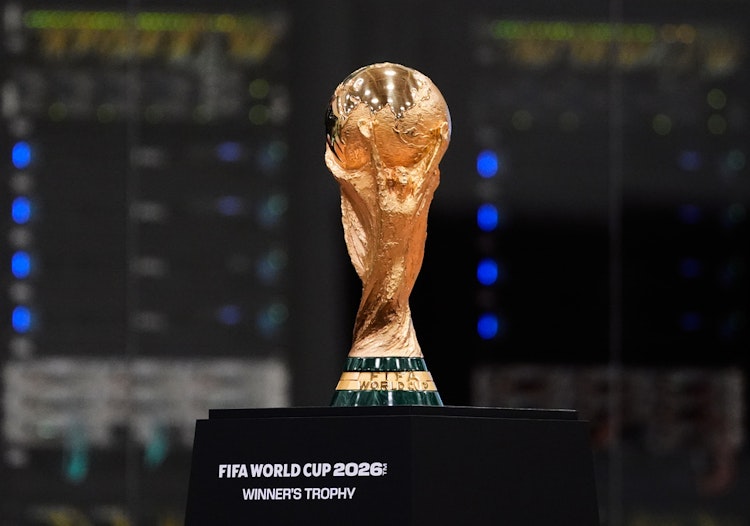
The 2026 World Cup didn't just introduce more Americans to soccer. New research suggests it also changed how millions engaged with sports betting—and could influence how they wager long after the tournament.
A July 2026 Dimers study of 2,000 US adults who regularly bet on sports found that 68% placed at least one wager during the World Cup. Among those bettors, 61% had never previously bet on soccer, while 17% placed their first-ever sports wager during the tournament.
The findings are part of Dimers' Heart vs. Data Index 2026, which examines how Americans approached betting during the World Cup, including what influenced their picks, how much they spent and which approaches produced the best results.
The scale of first-time participation was one of the clearest signs of the World Cup's impact.
More than three in five Americans who bet on the tournament had never previously wagered on a soccer match. For roughly one in six, the World Cup was their introduction to sports betting altogether.
For many, that meant learning a different betting landscape, from match markets and World Cup props to longer-term World Cup futures on the tournament's eventual outcome.
And the effect may extend beyond soccer.
Following the tournament, 30% of respondents said the World Cup made them more likely to bet on sports in the future.
But the tournament didn't just influence whether Americans bet. The research also found significant differences in how they chose their wagers—and how those decisions played out.
For many Americans, national pride proved difficult to ignore.
More than half (51%) of World Cup bettors backed the USMNT at least once when predictive models and betting odds suggested the Americans were clear underdogs. One in eight said they did so multiple times.
Even bettors who typically relied on analytical models weren't immune: 55% of that group still backed the US at least once despite the numbers pointing elsewhere.
Dimers' full Heart vs. Data Index describes the phenomenon as the "Patriotism Tax"—the price bettors can pay for supporting their country when emotion and probability point in different directions.
That tension between emotion and analysis extended well beyond Team USA.
The study identified a group of "Heart Bettors" who primarily relied on instinct or recommendations from friends and family and "Analytical Bettors" who turned to probabilities, statistics and predictive models.
Their results differed considerably.
More than half (51%) of gut-feeling bettors reported losing money during the World Cup, compared with 24% of those taking a data-driven approach.
At the other end of the scale, 46% of analytical bettors reported finishing ahead, compared with just 19% of gut-driven bettors.
Emotion-led bettors were also more likely to exceed their intended budgets, with almost one in four spending more than planned.
Despite the difference in results, only 16% of respondents said they used analytical models to help make their World Cup betting decisions.
That analytical approach could include using World Cup predictions to assess each matchup or identifying World Cup best bets based on where the numbers suggested there was value.
Bettors who turned to social media for help also struggled.
The study found that 41% of respondents who relied on picks from platforms such as TikTok, X, Discord and YouTube lost money during the tournament.
Those bettors also wagered more than the national average, spending more than $55 per match compared with an overall average of $52.
The experience appears to have changed some minds. Following the World Cup, 28% of bettors who had relied on social media touts said they planned to adopt a more data-driven approach in the future.
Perhaps the most significant finding is not what Americans did during the World Cup, but what they plan to do next.
One in five bettors (21%) said they plan to use more statistics, predictive models and analytics when betting on upcoming sports seasons.
Combined with the 30% who said the World Cup made them more likely to bet on sports in the future, the findings suggest the tournament's influence on US sports betting could extend well beyond the final.
For a complete breakdown of the results—including state-by-state betting behavior, spending, profitability and the differences between heart, social media and data-driven bettors—read the full Heart vs. Data Index 2026: How Did Americans Bet During the World Cup?


Damien Souness is Chief Experience Officer at Cipher Sports Technology Group, helping lead sports media brands such as Dimers. He specializes in creating trustworthy and data-driven content for sports fans, with experience working for globally recognized sports and media organizations.