Oct 2, 2026
Why is Brazil shutting down online sports betting and casino gaming?
Read Article 
Flutter is reportedly generating significant market-making revenue from Kalshi and other platforms.
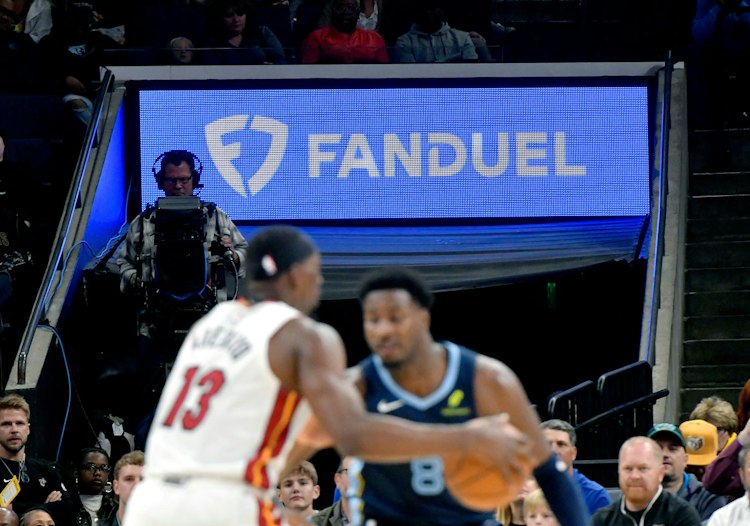
Flutter is making money from the rapid growth of prediction markets, but the FanDuel parent would likely prefer sports event contracts to disappear altogether.
As first reported by E+M, Flutter CFO Rob Coldrake indicated during a recent JP Morgan investor conference that greater regulatory clarity would be preferable to the current uncertainty surrounding sports prediction markets, with a complete shutdown likely representing the best outcome for the company.
According to a subsequent JP Morgan note, Flutter believes it can create value regardless of how the legal battle plays out, although analysts said a shutdown would "probably be the more positive scenario, at least near term."
That preference comes despite Flutter having established a significant presence in the prediction market industry.
JP Morgan reported that Flutter estimates its market-making activity now accounts for approximately 15% of Kalshi's combo volume. The company also acts as a substantial market maker on DraftKings' DKeX and Crypto.com.
Those activities are helping offset the cost of FanDuel's push into prediction markets.
FanDuel's prediction market spending is now expected to be closer to $200 million this year, down from a previously indicated $300 million, according to JP Morgan. Approximately $50 million in market-making EBITDA would further offset that investment.
In 2027, spending could fall below $200 million, while market-making EBITDA could reach an estimated $150 million, potentially bringing Flutter's prediction market operation close to break-even.
Making money from prediction markets does not necessarily mean their continued expansion is the best outcome for Flutter's broader business.
FanDuel operates one of the largest regulated sportsbooks in the United States, while sports prediction markets have created a new form of competition by offering sports event contracts in states where traditional online sports betting remains illegal through FanDuel Predicts.
Flutter could therefore be willing to sacrifice its growing market-making revenue if a prohibition on sports contracts strengthened the long-term position of its regulated sportsbook business.
The regulatory environment may also be influencing how openly operators discuss that possibility. JP Morgan said Flutter believes the Ninth Circuit's recent ruling against Kalshi strengthened the states' position and could potentially bring the issue before the Supreme Court in the first half of 2027.
Flutter's position provides an interesting contrast with DraftKings, which has been more publicly enthusiastic about the growth of prediction markets.
DraftKings CEO Jason Robins recently said volume on the company's predictions product had increased almost 2.5 times since July. He said DraftKings was approaching a double-digit share of sports prediction market volume, with an even higher share of NFL activity.
The growth has been strong enough for DraftKings to bring forward some investment originally planned for 2027.
However, even Robins has acknowledged that shutting down sports prediction markets could benefit DraftKings' established sportsbook business.
"If prediction markets got shut down by the Supreme Court tomorrow, our share price would pop," Robins said at a recent Wells Fargo conference.
Neither FanDuel nor DraftKings currently offers sports prediction markets in states where it operates a regulated sportsbook, highlighting the balancing act facing both companies as they pursue opportunities in prediction markets without jeopardizing relationships with state regulators.
For Flutter, that balance is becoming clearer: prediction markets can generate revenue while they exist, but removing them as a competitor to FanDuel could ultimately be worth considerably more.


Damien Souness is Chief Experience Officer at Cipher Sports Technology Group, helping lead sports media brands such as Dimers. He specializes in creating trustworthy and data-driven content for sports fans, with experience working for globally recognized sports and media organizations.